In trials, semaglutide demonstrated a reduction in major adverse cardiovascular events in patients with obesity and established cardiovascular disease, reinforcing its preventive role
Keep in mind that some other drinks, such as teas and colas, contain caffeine, too
There is a hierarchy for the injection and infusion therapy, with which you must be familiar
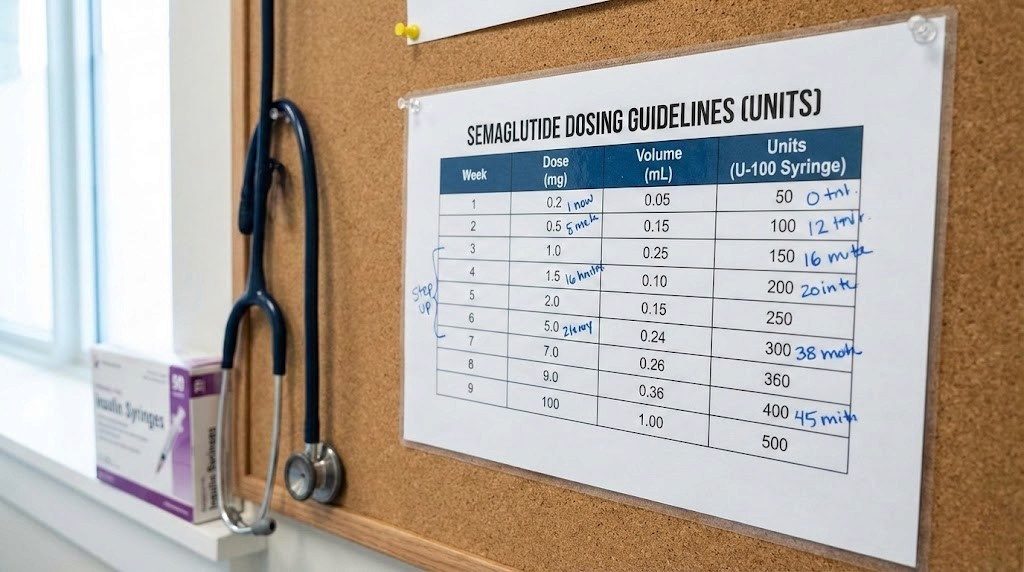
This material is educational, not a personal-preparation guide The reconstitution math for a 30 mg vial is linear: any concentration is reachable by choosing the corresponding diluent volume, but only a few concentrations make operational sense Three of the most common educational target concentrations are 10 mg/mL (3 mL diluent), 6 mg/mL (5 mL diluent), and 15 mg/mL (2 mL diluent), each useful at different dose levels The "right" answer is the one that fits the patient's prescribed weekly dose into a clean syringe gradation, not a universal formula For 12 mg weekly doses, concentrations below 10 mg/mL push the dose volume over 1 mL, beyond a single U-100 syringe Direct answer The question "how much bacteriostatic water to reconstitute 30 mg retatrutide" does not have a single correct answer
The exact connection between zinc and AGA is still debated, but it seems that disturbances of the zinc metabolism are associated with hair loss
Heres what we think we know for sure: GLP-1 drugs stimulate the production of insulin (which reduces blood sugar) and suppress the release of glucagon (which tends to raise blood sugar)


:max_bytes(150000):strip_icc()/GettyImages-1286893989-9dfe40f41ac3447f8083a0552086d767.jpg)

.jpeg?crop=568.9,426.7,x35.5,y46.1&width=1200&height=900)